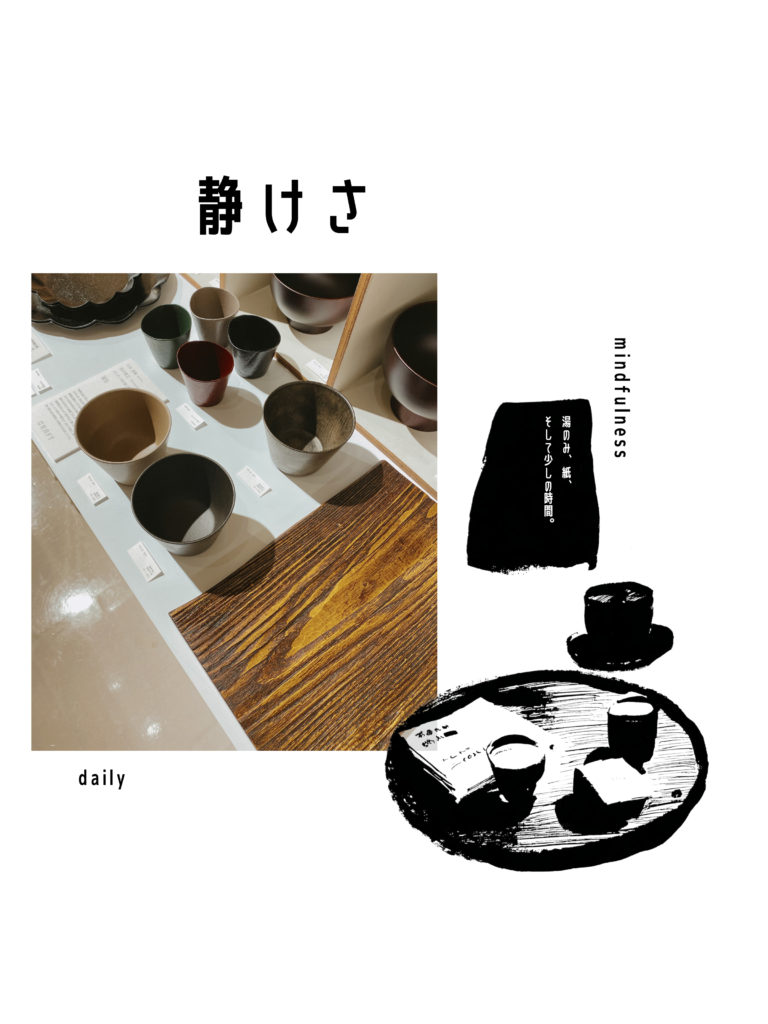
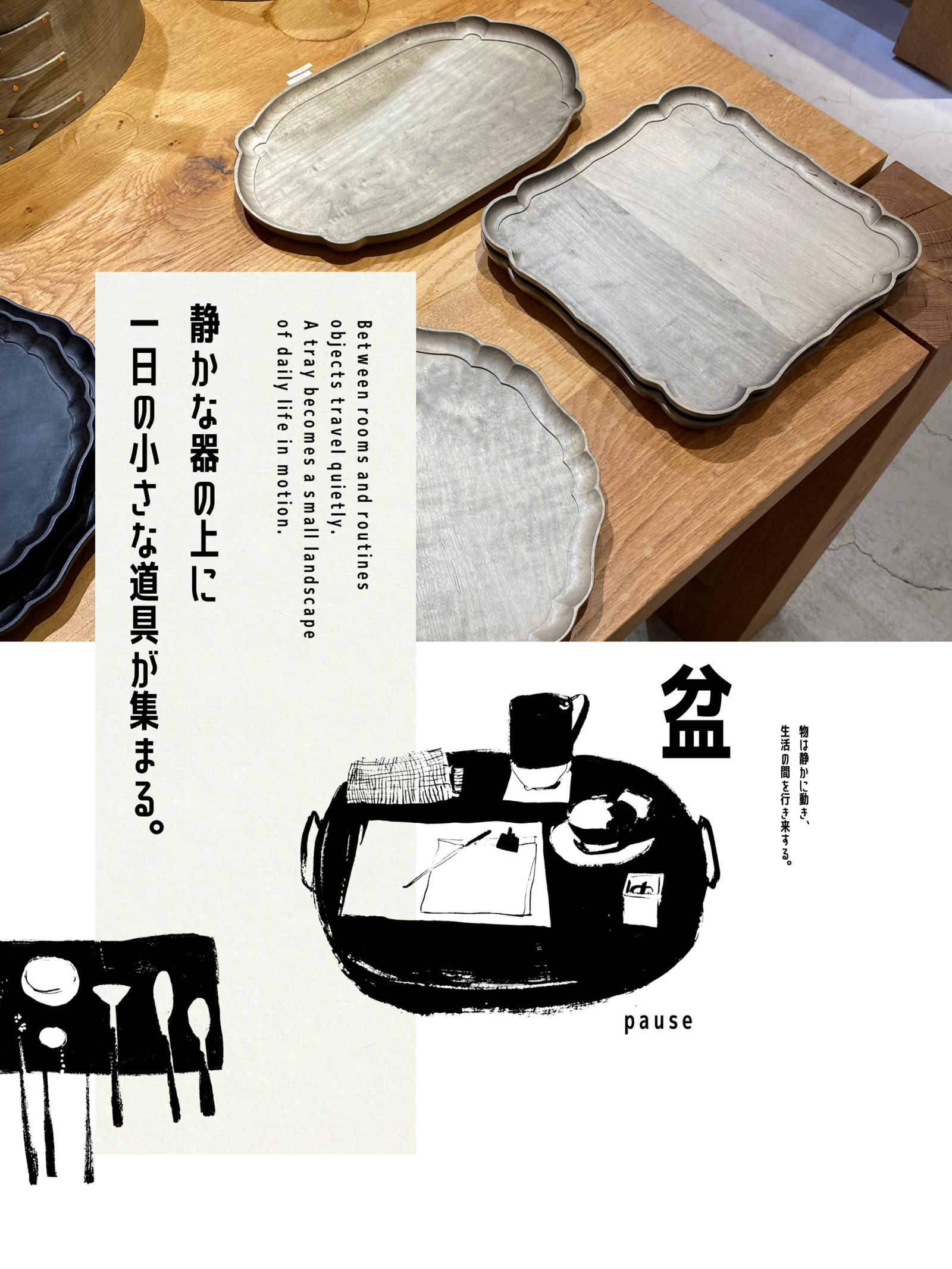
Some objects live between places rather than belonging to one. They travel quietly through the rooms of a home, carrying the small necessities of the day: a cup of tea, a book left open mid-page, a folded cloth, perhaps a sweet placed beside the cup.
A tray is one of these objects.
In Japan, trays appear often in everyday life, not only as tools for serving but as gentle organizers of small moments. A tray can move easily from the kitchen to the table, from the table to a low desk near a window. Sometimes it rests beside a book and tea, other times it carries a simple meal. Its presence is quiet, but it gathers things together in a way that feels intentional.
Nothing about a tray insists on a single role. It simply follows the rhythm of the day, holding whatever is needed for a while before the objects move on again.
This openness reflects something larger in Japanese living spaces. Rooms themselves are rarely limited to one function. A corner used for tea in the morning may become a place for reading later in the afternoon. Sliding doors shift the space, and objects travel with us from one moment to the next.
Trays move easily within this rhythm. They carry what we need and then wait again in stillness.
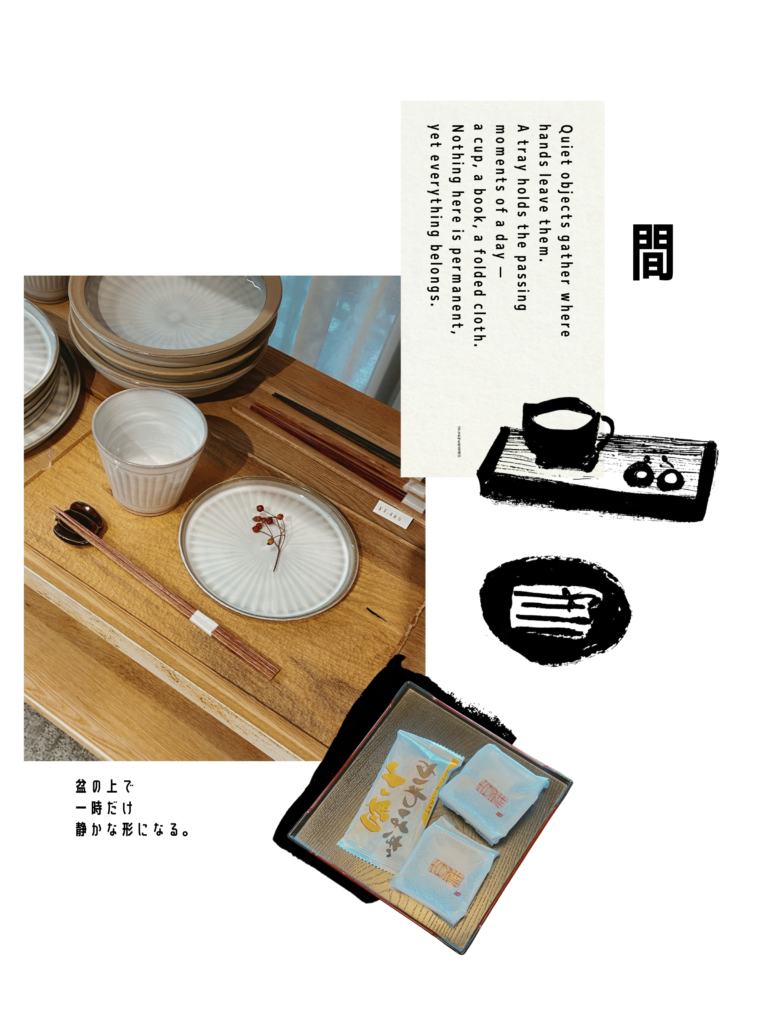
Other objects share this quiet adaptability. Bowls hold different foods depending on the meal. Cloths appear as table coverings, wrapping cloths, or simple layers beneath delicate objects. Books drift from one place to another as the light changes through the day.
None of these things are complicated, yet together they shape the atmosphere of a home. A few objects placed together on a tray can turn an ordinary pause (tea beside a book, a sweet beside the cup) into a small, deliberate moment.
In Japanese aesthetics there is often an appreciation for the spaces between actions, the pauses that allow daily life to breathe. A tray expresses this idea in a simple way. It frames a moment without fixing it in place.
And perhaps this is the quiet work of trays: to gather the small rituals that pass gently through our days.