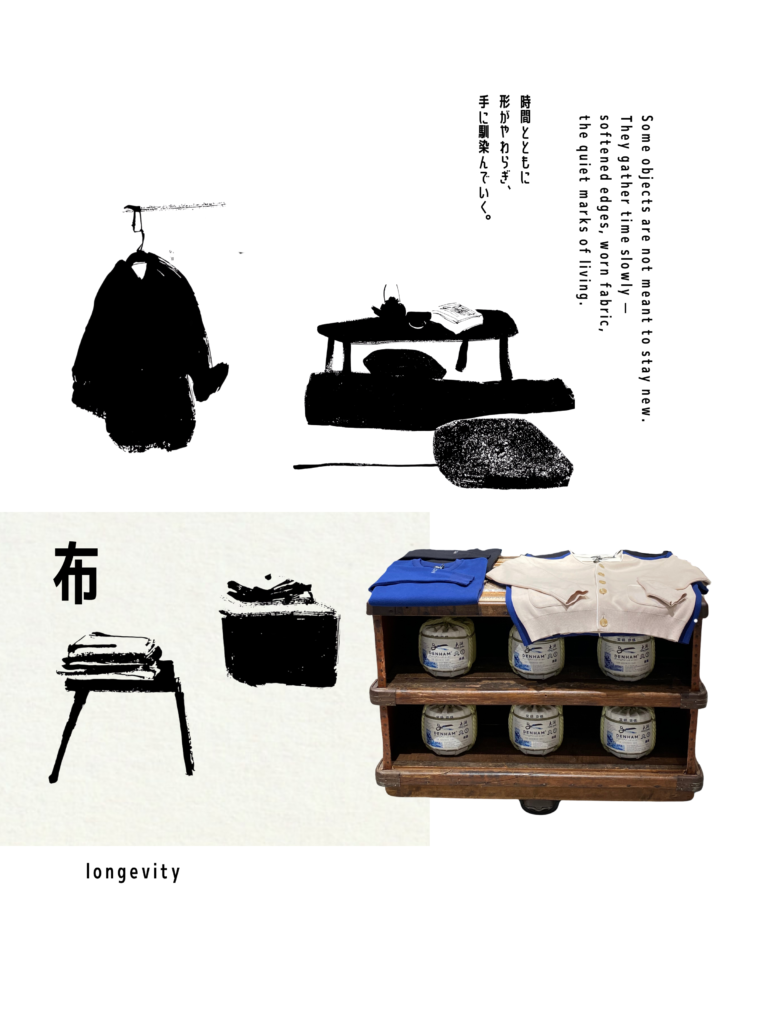
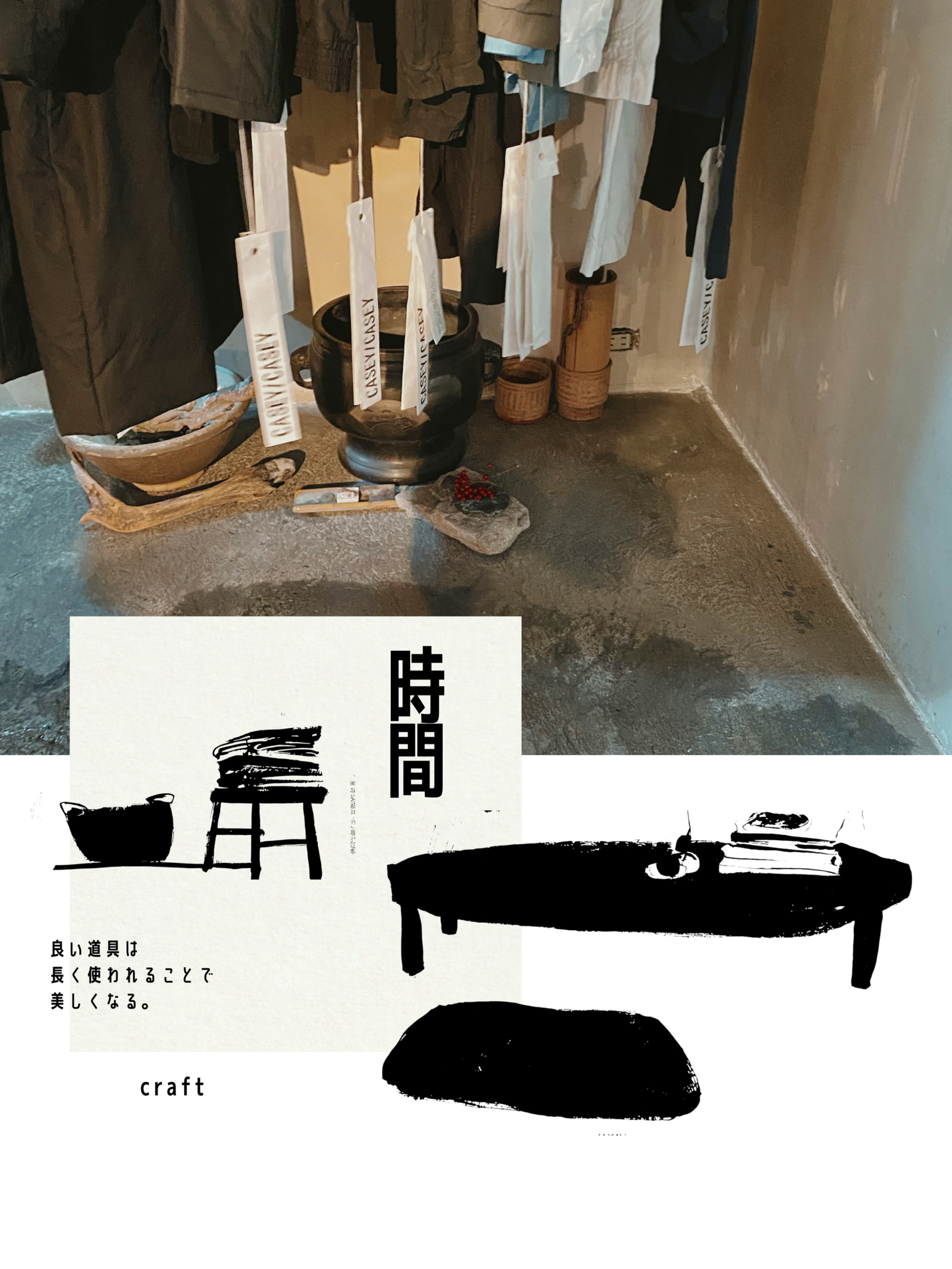
Some objects enter our lives quietly and remain there for years. They do not demand attention when we first bring them home, yet over time they become part of the rhythm of everyday life: a chair that waits in the same corner, a teapot used each morning, a jacket that softens with wear.
In Japan there is a long appreciation for objects that change gently with time. Materials such as wood, cloth, and ceramic are valued not only for how they look when new, but for how they slowly evolve through use. Edges soften, surfaces deepen in color, fabric begins to carry the memory of movement. These changes are not flaws. They are signs of a life lived alongside the object.
This way of thinking naturally shapes how things are chosen. Rather than searching for constant novelty, attention turns toward objects that will remain meaningful over many years. Furniture built from solid wood, tools shaped with care, garments made from durable cloth, each of these carries the quiet promise of longevity.
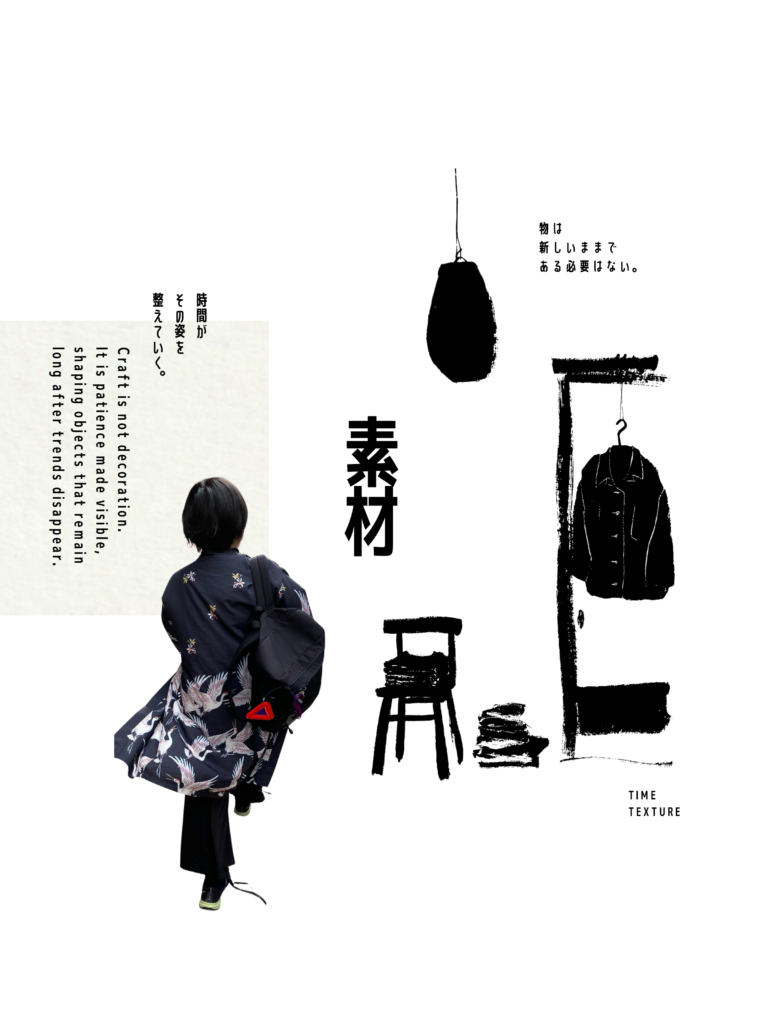
Living with such objects encourages a different relationship with consumption. When something is made well and treated with care, there is little reason to replace it. Instead of cycling through new purchases, we learn to appreciate the slow transformation that time brings.
A wooden table, for example, gradually darkens where hands rest most often. A teapot becomes familiar in its weight and balance. Clothes soften with repeated wear, shaping themselves to the body that moves in them. These small changes give objects a personal character that cannot be manufactured.
Japanese aesthetics often celebrate this quiet aging process. Beauty is found not only in perfect surfaces but in the subtle marks that appear over time. The passing of years becomes part of the object itself.
Seen in this light, everyday things are more than temporary tools. They become companions to daily life, carrying traces of the routines and rituals they support.
And perhaps this is the deeper meaning of living with well-made objects: they stay with us long enough to grow into something familiar, shaped slowly by the passing of time.