
Every autumn in Japan, I notice the stationery shops beginning to look toward the new year. Calendars, planners and notebooks appear in such variety that choosing one can feel like entering a whole world of possibilities. I remember looking for a planner there myself and being struck by just how much there was to choose from.
I’ve come to think of that annual choice as more than a practical reset. A new calendar gives the year a shape; a new notebook offers a place to begin. And sometimes, choosing one is the first small step toward making room for a practice that feels genuinely yours.
A page for the year ahead
I have a tiny calendar I’ve bought almost every year for about a decade. Once, I missed it, and I remember not knowing what to replace it with. It’s a small thing, but that’s part of why I like it: a familiar page to look at each day, quietly marking time.
The new year often arrives with plans we make for ourselves: to pay closer attention, to make time for something we enjoy, to begin again in some small way. A calendar or journal can give those intentions somewhere to live. It doesn’t have to hold a grand resolution. It might simply be a page where we notice the day, write a thought down, or make a plan we’re glad to have made.
Choosing a practice that supports us
When I met people in Japan, one question I remember being asked was, “What is your hobby?” It caught me off guard. I wasn’t sure I had a good answer. Over time, I’ve thought more about how important it is to choose something for ourselves, not only to fill the hours after work, but to give our lives a source of interest, pleasure and meaning.
That question brings Ikigai [生きがい] to mind. It’s a broad Japanese word for what brings value and joy to life, including people and activities such as work and hobbies. I wouldn’t use it as a label for journaling, or suggest that a notebook can supply someone’s purpose. But it helps me think about the value of making space for things we choose because they matter to us.
In a day shaped by screens and constant input, writing by hand can offer a different kind of attention. The page is physical and unhurried. You can write a plan, collect a thought, or simply spend time arranging the page. For me, that is part of what makes journaling feel supportive: it can become a small ritual of care, something restorative that belongs to you.
Make the pages your own
One of the things I find inspiring in Japanese stationery shops is the range of ways to make a paper practice personal. A notebook can be plain or structured, portable or spacious. You might choose a cover, add pockets, keep a few stickers close by, or use stamps to mark the things you want to remember.
I’ve seen people in Tokyo cafés save little pieces of paper in their journals: a scrap of beautiful wrapping, perhaps, with a note about where it came from. Those details turn a notebook into more than a place for appointments. It can hold traces of a day and the things that caught your attention.
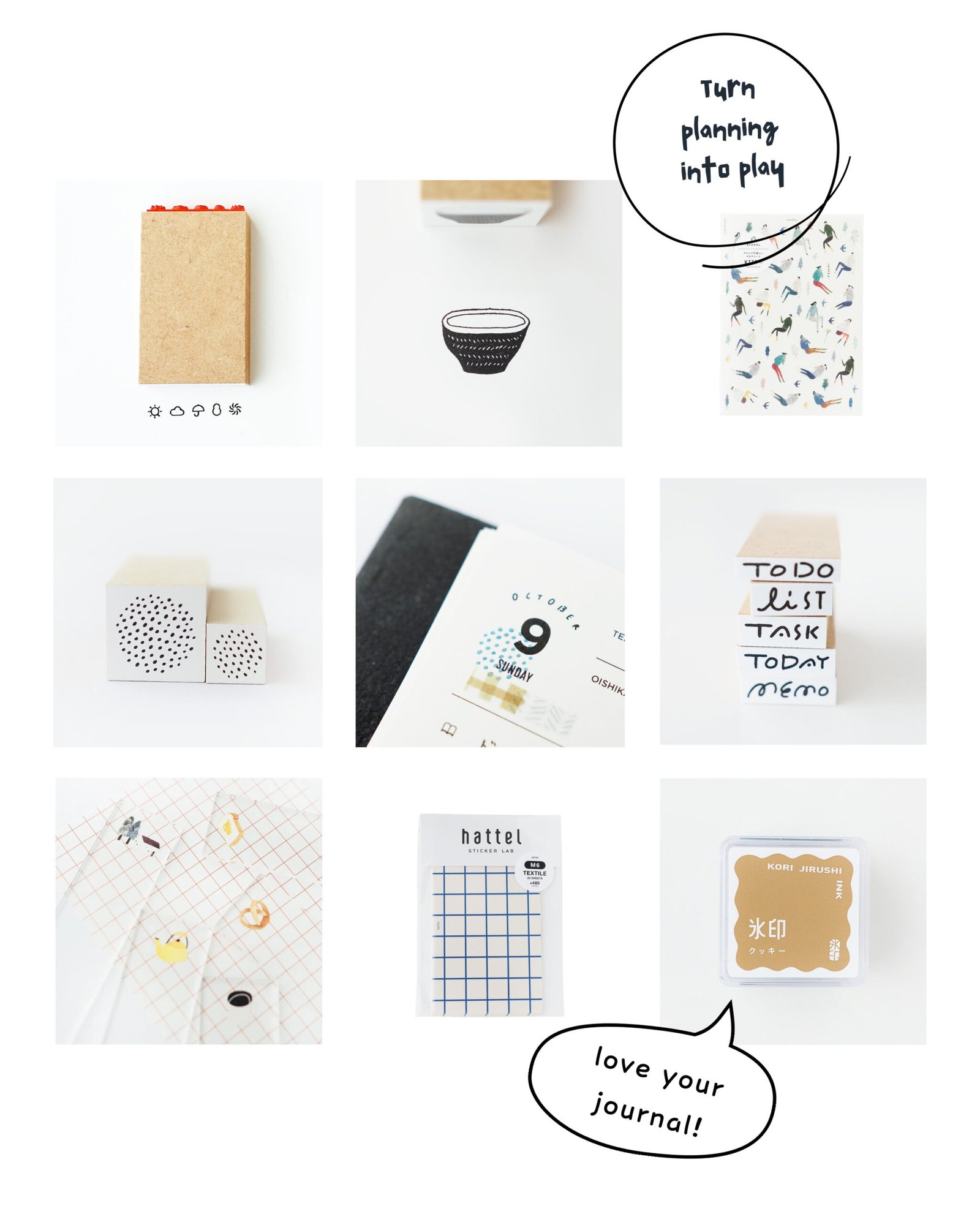
The ASANEL Bungu selection is a good example of the playful accessories that can make this kind of journaling inviting. Stamps, stickers and small paper tools give you ways to make a page feel like your own. You don’t need a complete system or a perfect spread. You can begin with the details that make you want to sit down and write.
Choose a calendar or planner that fits your day
Some people want a clear monthly view; others want room for weekly plans, notes, or a page to themselves. MUJI’s 2027 UK selection includes different diary formats, a daily tear-off calendar and small desktop calendars, alongside its familiar pared-back stationery. The range makes a useful point: the right paper tool depends on how you want to use it.
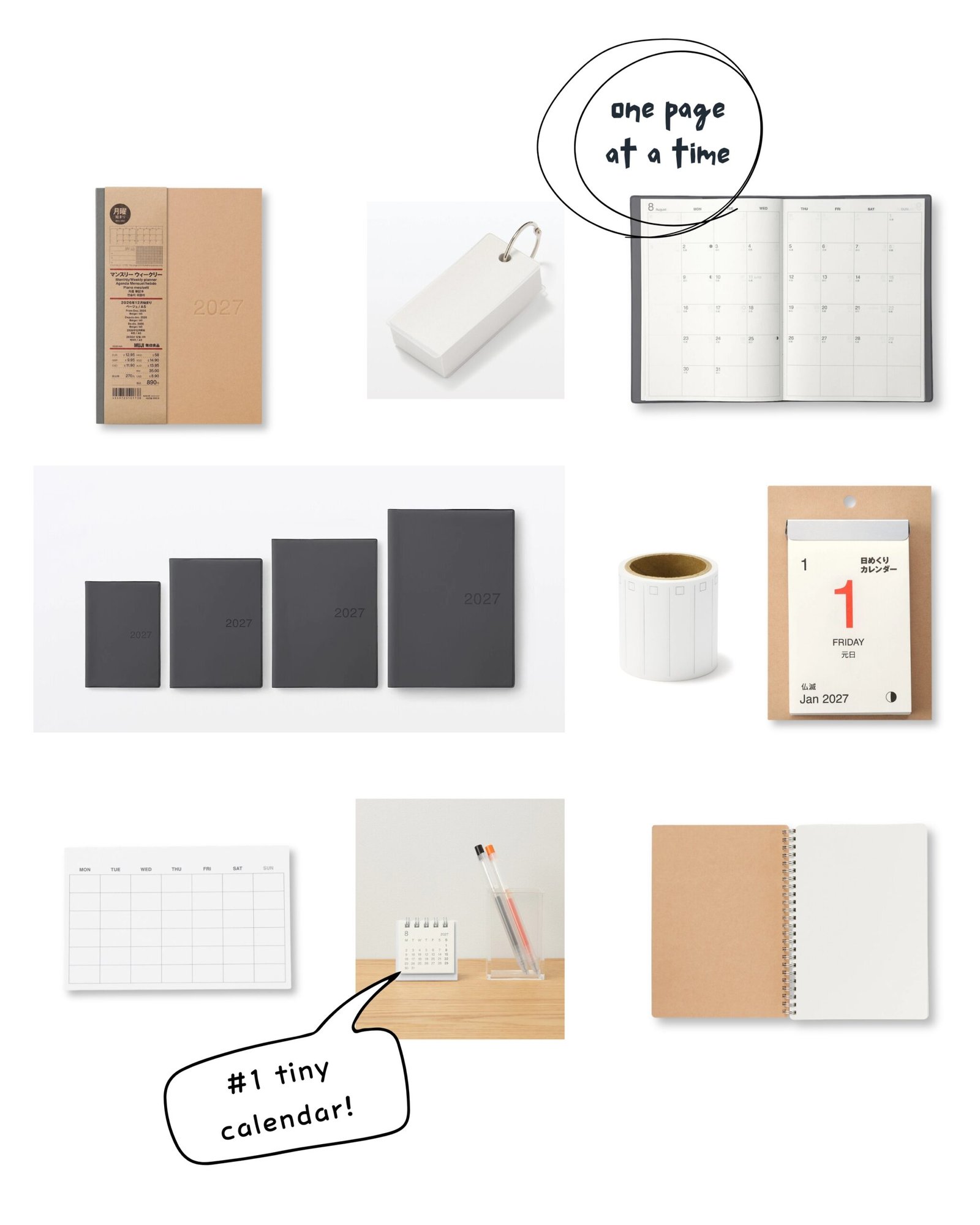
A calendar on the desk can help you see the month at a glance. A planner can travel with you from one part of the day to another. Neither has to become a demanding productivity system. The question can be simpler: what kind of page would help you feel more present in your own plans?
Explore our paper & planning picks:
A companion to carry
For people who want their planning close at hand, a compact diary can make the practice easy to take along. I like that some formats combine a calendar with space for notes, while others leave the page open for you to decide what belongs there.
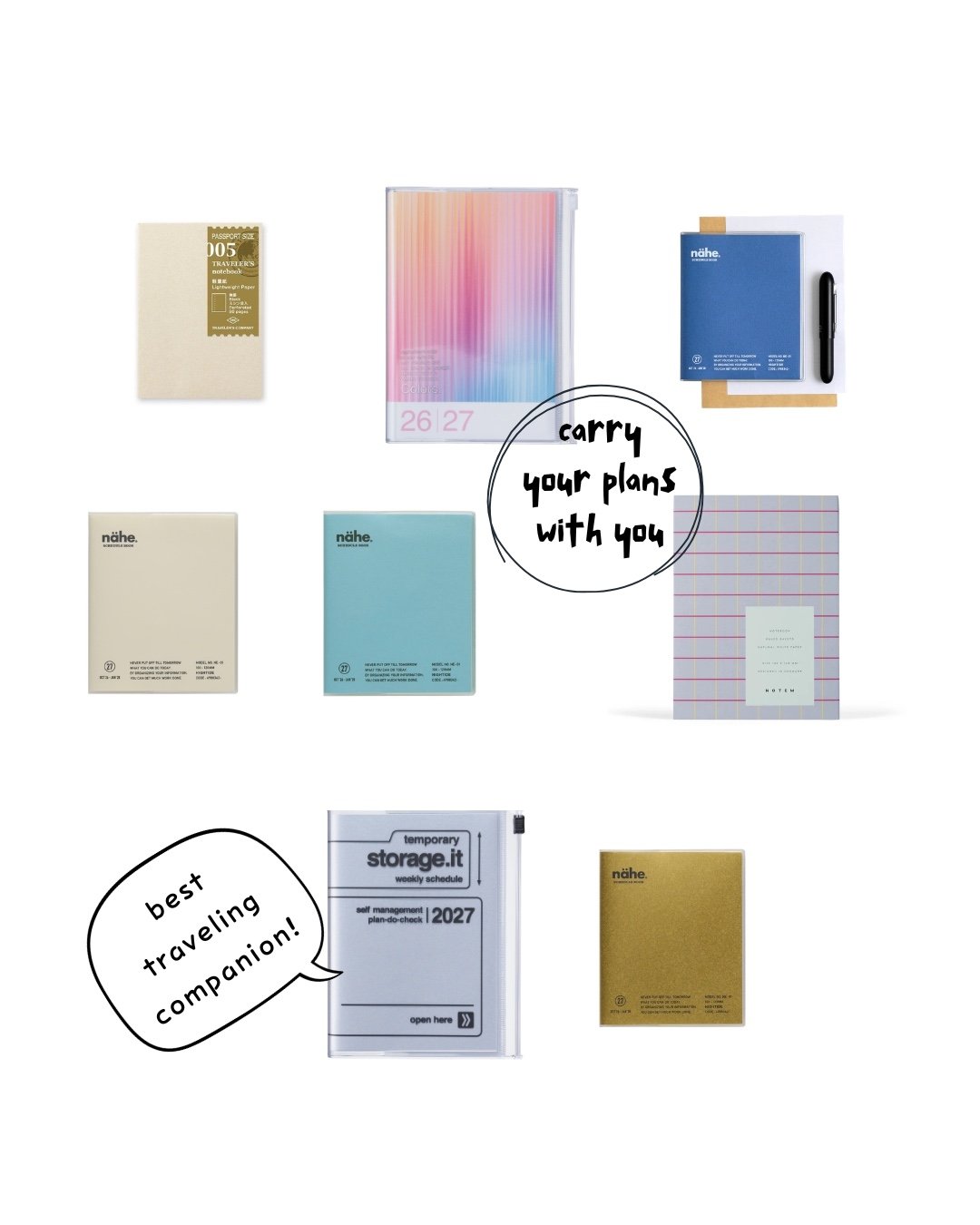
The collage includes examples such as Hightide’s Nähe pocket monthly diary and Mark’s Storage.It weekly diary, which has a zip cover with room for small stationery items. They offer different approaches to carrying your plans: one is a slim monthly format; the other has a more structured weekly schedule and space for notes. The Colors diary adds another possibility, with a zipped cover and a bright gradient. These are not the only ways to journal, of course. They show how the details of a planner can support the habit you actually want to keep.
Explore our paper & planning picks:
A notebook, a calendar, a few stamps or stickers, perhaps a cup of tea beside them: it can be a modest start. The objects matter because they help make the practice inviting. We can choose them according to what feels useful, beautiful or simply fun to use, then let the ritual develop in its own way.
What to Buy in Japan
If you’re visiting Japan, I’d make time to browse the stationery section at LOFT. I’d especially look for stamps and stickers: small tools that can bring personality to a planner or make a page more enjoyable to use. LOFT’s stationery section spans notebooks, planners, stamps, stickers and other paper goods, so it’s a good place to explore the variety in person.
Japanese Magazines to Read
For a design-minded notebook discovery, I’d turn to Casa BRUTUS’s feature “10 well-designed grid notebooks.” It looks at notebooks through their design, making it a fitting read for anyone curious about the many ways a simple grid page can invite writing.
Read this Casa BRUTUS article here.
Mentioned in this story:
MUJI Germany – European Delivery
UK readers: £15 off your first MUJI UK order over £70 with code L6C513835Z, valid until January 1st, 2027.
Germany and selected European destinations: 15% off your first MUJI Germany order over €60 with code QSNWBCO346FC, valid until January 1st, 2027.
For more of our paper and planning finds, including diaries, journals and little tools for making them your own, explore the NŪNAI NEST storefront.
